Your EPC team builds the energy storage facility; Leave the energy management to Thingnario.

Your EPC team builds the energy storage facility; Leave the energy management to Thingnario.

Your EPC team builds the energy storage facility; Leave the energy management to Thingnario.

The EMS built into a BESS cabinet only manages the battery. When a site also has PV, EV chargers, gensets and maximum demand limits, you need more. We integrate it all and handle even the most complex site dispatch.

Integrated Management Across Devices. Must Be Controlled from a "Site-Level Height"

Integrated Management Across Devices. Must Be Controlled from a "Site-Level Height"

Integrated Management Across Devices. Must Be Controlled from a "Site-Level Height"

The built-in EMS focuses on battery health, SOC and PCS charging and discharging. That's what equipment manufacturers do best.

The built-in EMS focuses on battery health, SOC and PCS charging and discharging. That's what equipment manufacturers do best.

thingnario works one level up: it monitors real-time energy use across the site, predicts the next move, and sends the best dispatch decisions to each device.

thingnario works one level up: it monitors real-time energy use across the site, predicts the next move, and sends the best dispatch decisions to each device.

laptop showing stock chart on desk

SITE - thingnario

Know what's happening across sites, what to coordinate next, and which device acts on each decision.

EQUIPMENT - Built-in EMS

Battery safety and health, SOC management, PCS charge and discharge execution

EQUIPMENT - Built-in EMS

Battery safety and health, SOC management, PCS charge and discharge execution

1

red and blue metal tower under blue sky during daytime

EV Chargers, Port Cranes

These types of scenarios require extremely high-frequency, short-duration power forecasting and control. For example, when multiple electric vehicles start charging simultaneously, or a crane lifts a heavy load in an instant, the site's load will suddenly spike.


To shave the peak, the system must keep a close eye on the grid connection point and accurately dispatch discharge capacity within an extremely short time; the discharge must stop immediately once the load recovers to prevent power reversal.

2

a gas station with a lot of plants on the side of the building

Diesel Genset Coordination, Black Start

Microgrid

After a grid outage, which source starts first among the diesel generator, energy storage, and solar PV? Who takes over? When does it reconnect? This is a classic cross-equipment coordination challenge.

It requires an overarching control system at the "site-level" to schedule the sequence and logic. The off-grid island microgrid project during Typhoon Danas is a prime example of cross-equipment collaborative dispatch under extreme environments.

3

Electrical insulators and metal components on a transformer against a clear blue sky

Solar PV

Adding energy storage increases solar self-consumption, but when solar output exceeds site demand, any power backfed into the grid triggers the Reverse Power Relay (PRP)—shutting down the entire PV system. To prevent trips and maximize RE utilization, the system must track solar generation, site load, and remaining storage capacity in real time, routing excess power to the battery before reverse flow occurs.

4

two men sitting at a table with papers and a pen

Manage Maxiumn Demand

Energy management must focus on "the total power at the grid connection point of the entire site," rather than "the power of a single energy storage cabinet itself."


How much total electricity the site consumes and how far it is from the contract capacity penalty both need to be calculated and controlled in real-time from the perspective of the entire site to truly help the owner save on electricity bills.

Every Site Is Different. We Can Handle It.

Every Site Is Different. We Can Handle It.

Every Site Is Different. We Can Handle It.

Common site setups, ready out of the box.

Common site setups, ready out of the box.

How You Save Day to Day

How You Save Day to Day

Maximum Demand Reduction

Time-of-Use Scheduling

PV + BESS Maximum Self-Consumption

PV Self-Consumption + ToU Scheduling

Backup During Outages

Backup During Outages

Island Mode

Microgrid

PV + BESS Maximum Self-Consumption

Japan Disaster Mode

laptop showing stock chart on desk

A Rare Feature
Customizable and Visible on the System

A Rare Feature
Customizable and Visible on the System

These modes run on a rule engine (action profile). Each profile holds multiple rules, checked in priority order: when a condition is met, which device acts, and what it does. Conditions can be combined, such as SOC, grid connection point power and time of day.

These modes run on a rule engine (action profile). Each profile holds multiple rules, checked in priority order: when a condition is met, which device acts, and what it does. Conditions can be combined, such as SOC, grid connection point power and time of day.

These modes run on a rule engine (action profile). Each profile holds multiple rules, checked in priority order: when a condition is met, which device acts, and what it does. Conditions can be combined, such as SOC, grid connection point power and time of day.

01

Plan the deadband based on the power consumption characteristics of the site

In some sites, power fluctuations can be large. When power hovers slightly above and below the charging/discharging thresholds, the energy storage system might be repeatedly woken up—charging for a bit, stopping, and charging again. These actions contribute almost nothing to saving on electricity bills, yet every single one consumes the battery's equivalent cycles. In the settings, each site can configure its own "deadband": when the power falls within this buffer zone, the energy storage system will maintain its previous action. Eliminating these useless actions preserves battery life. Setting a wider deadband means the battery moves less and lasts longer; setting a narrower one captures more benefits. Where to draw this line can be adjusted based on the power consumption characteristics of each site.

02

How much was saved is shown with a before-and-after comparison. The system calculates two numbers simultaneously: the actual electricity bill, and what this month's bill would have been without energy storage. The difference between the two represents the true benefit. Savings are broken down into three areas—savings from direct solar supply, savings on active energy charges, and avoided penalties for exceeding contracted capacity—allowing owners to see exactly where the money is being saved. Furthermore, these can be broken down by time slots: peak, semi-peak, Saturday semi-peak, and off-peak. Both daily and monthly reports can be exported directly to Excel, so owners can use them for internal reporting without needing to ask you for the data.

03

It can be designed for a single site or across multiple sites. The indicators can be customized based on what the owner wants to monitor, and it can also integrate with other systems, such as fire safety, for a unified presentation. Some owners want more than just a management tool; they want an image wall that visitors can see—turning the layout, branding, and data into a lobby display. This is an optional add-on.

01

Plan the deadband based on the power consumption characteristics of the site

In some sites, power fluctuations can be large. When power hovers slightly above and below the charging/discharging thresholds, the energy storage system might be repeatedly woken up—charging for a bit, stopping, and charging again. These actions contribute almost nothing to saving on electricity bills, yet every single one consumes the battery's equivalent cycles. In the settings, each site can configure its own "deadband": when the power falls within this buffer zone, the energy storage system will maintain its previous action. Eliminating these useless actions preserves battery life. Setting a wider deadband means the battery moves less and lasts longer; setting a narrower one captures more benefits. Where to draw this line can be adjusted based on the power consumption characteristics of each site.

02

03

01

Plan the deadband based on the power consumption characteristics of the site

In some sites, power fluctuations can be large. When power hovers slightly above and below the charging/discharging thresholds, the energy storage system might be repeatedly woken up—charging for a bit, stopping, and charging again. These actions contribute almost nothing to saving on electricity bills, yet every single one consumes the battery's equivalent cycles. In the settings, each site can configure its own "deadband": when the power falls within this buffer zone, the energy storage system will maintain its previous action. Eliminating these useless actions preserves battery life. Setting a wider deadband means the battery moves less and lasts longer; setting a narrower one captures more benefits. Where to draw this line can be adjusted based on the power consumption characteristics of each site.

02

03

EPCs Choose the Equipment, We Take Care of Integration.

Energy storage cabinets, PCS, power meters, and PV inverters each have their own communication protocols and register definitions.Equipment selection should not be constrained by software; Thingnario transforms integration into a standardized process.

Energy storage cabinets, PCS, power meters, and PV inverters each have their own communication protocols and register definitions.Equipment selection should not be constrained by software; Thingnario transforms integration into a standardized process.

Energy storage cabinets, PCS, power meters, and PV inverters each have their own communication protocols and register definitions.Equipment selection should not be constrained by software; Thingnario transforms integration into a standardized process.

laptop showing stock chart on desk

Models that are already integrated can be used directly. For those not on the list, just send us the integration documentation.

Models that are already integrated can be used directly. For those not on the list, just send us the integration documentation.

Models that are already integrated can be used directly. For those not on the list, just send us the integration documentation.

Integrated in 7 to 10 Days

Work starts once we have the protocol document. Commit to the site owner's choice of equipment at the proposal stage, with no need to check back on support.

FAT Done Before Delivery

We run the FAT in-house after integration, confirming data read correctly and commands execute, so issues are caught before they reach site.

SAT on the Day of Installation

SAT on the Day of Installation

Equipment in, wiring done, SAT completed the same day. No return trip for your crew to wait on software.

On-Site Control. No Cloud Dependency.
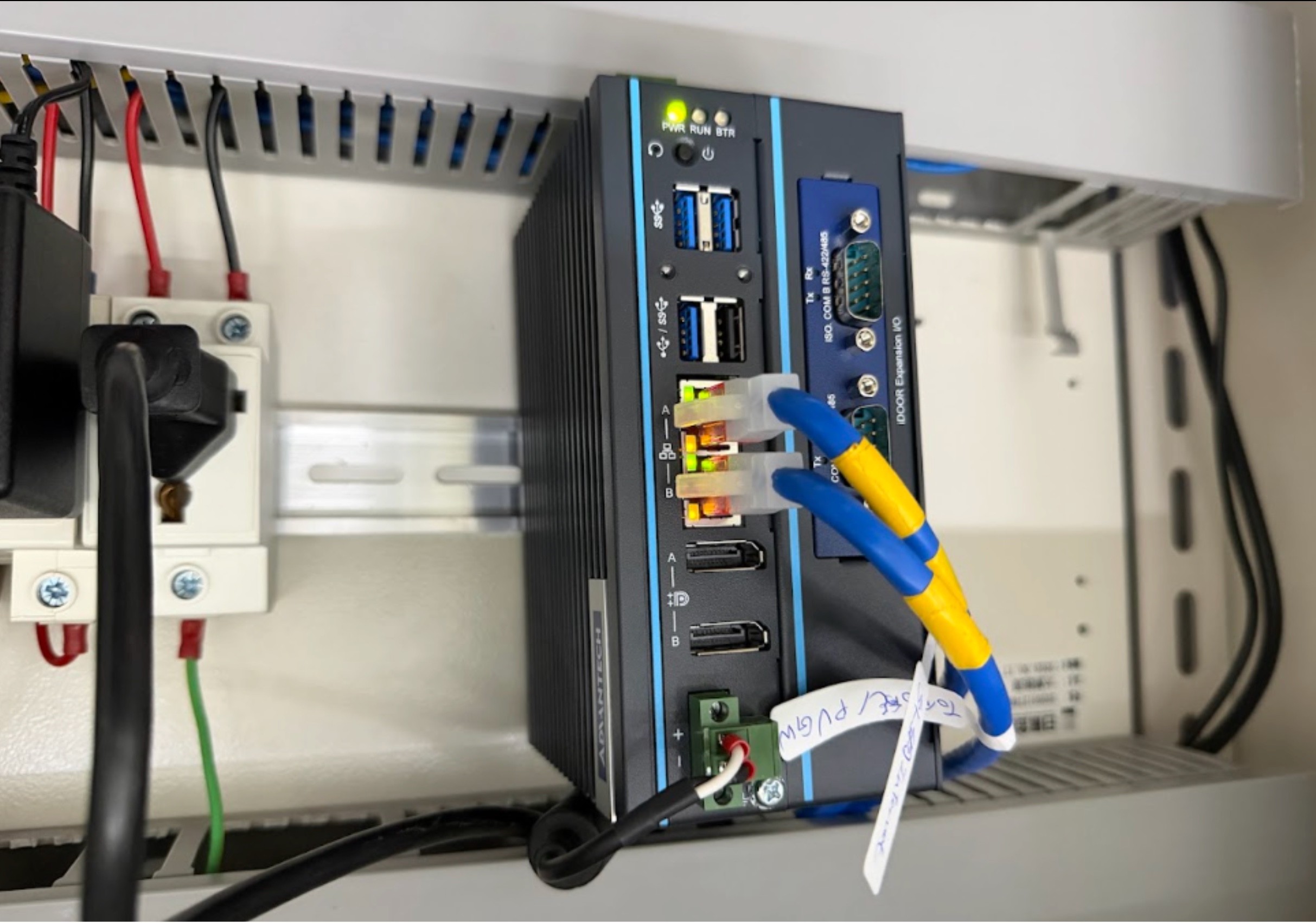
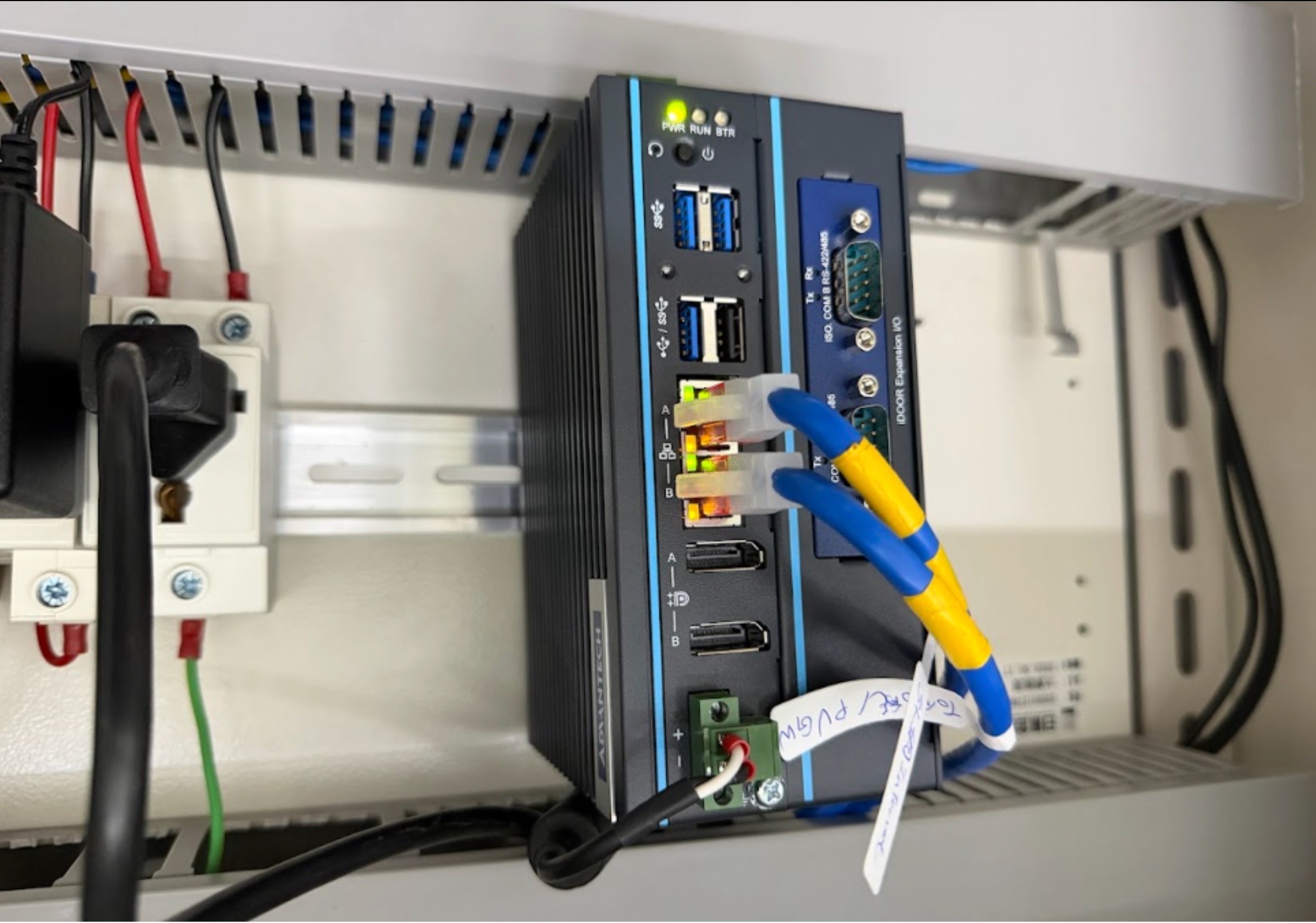
Control logic runs on the on-site controller, so operation continues even when the network drops. Data backfills automatically on reconnection.

Control logic runs on the on-site controller, so operation continues even when the network drops. Data backfills automatically on reconnection.

laptop showing stock chart on desk

1

Made in Taiwan, Tender-Ready

Made in Taiwan, Tender-Ready

thingnario's own brand, built by Advantech in Taiwan. TPM 2.0 onboard, proven at multiple commercial BESS and microgrid sites across Taiwan.

CE・FCC・BSMI
UL 61010-2-201

2

Fits Your Panel

Fits Your Panel

DIN-rail mounting. Fits straight into the EMS weatherproof enclosure, no extra cabinet needed.

35 × 105 × 150 mm・0.8 kg
10–36 VDC・Typical power consumption 21W

3

Wire Signals Directly

Wire Signals Directly

DI/DO with 2500 VDC isolation connect directly to ATS status, PCS control I/O and genset remote-start signals, with no converter modules.

8 × DI・8 × DO
2 × GbE・2 × RS-232/422/485

4

Built for the Outdoors

Built for the Outdoors

Aluminium alloy casing, tested for shock and vibration, with a programmable watchdog that restarts the unit automatically on faults.

−40 ~ 70°C Operating Temperature
IEC 60068-2-27 / -2-64

laptop showing stock chart on desk
Support Device List

Tell Us About Your Project

Send us your site conditions and equipment list. We'll assess the integration scope and control strategy first, and you decide whether to work together.

Send us your site conditions and equipment list. We'll assess the integration scope and control strategy first, and you decide whether to work together.